
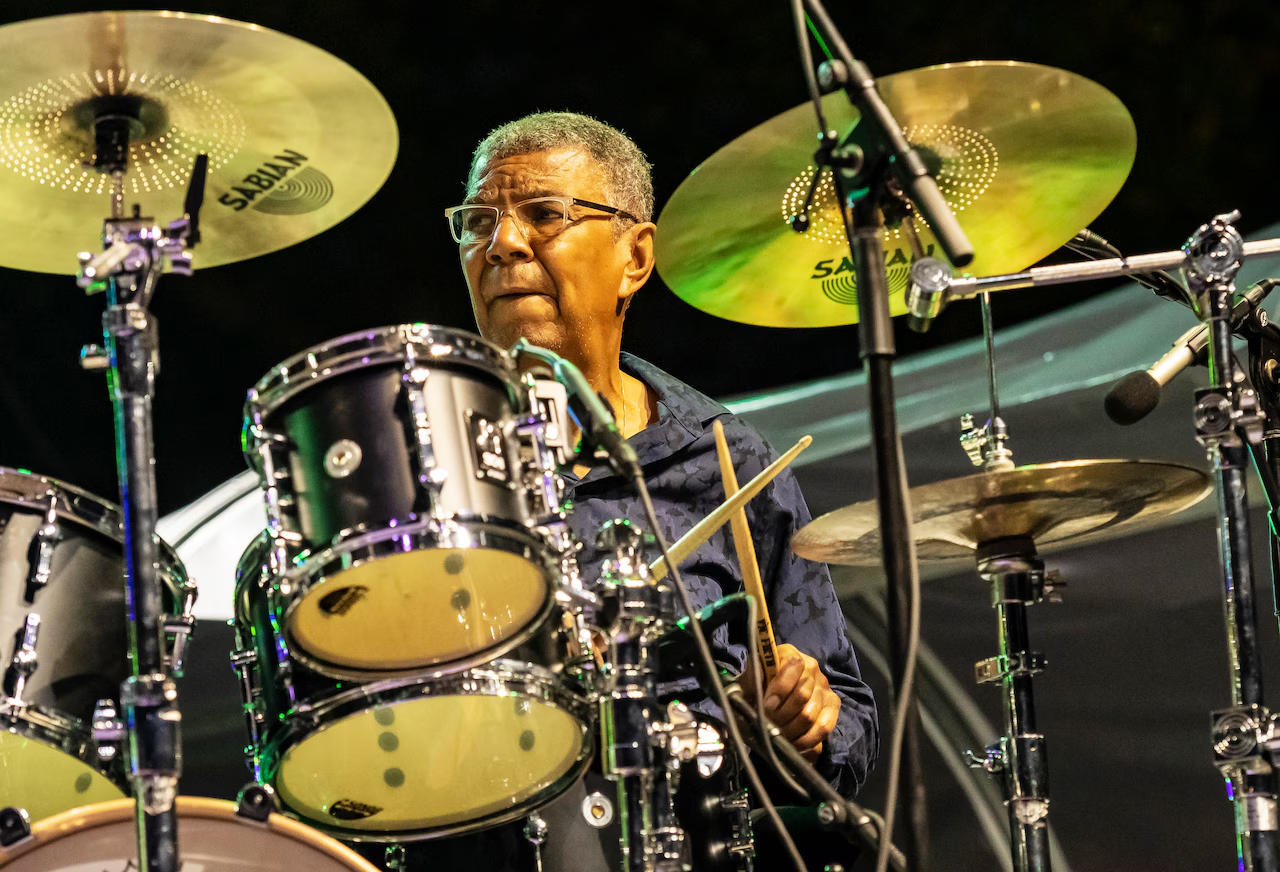
Jack DeJohnette, Miles Davis Collaborator and Rhythmic Innovator, Dies at 83
NEW YORK — Jack DeJohnette, the visionary jazz drummer, composer, and bandleader whose dynamic style reshaped modern jazz and fusion, died Sunday in Kingston, New York, at the age of 83. His assistant, Joan Clancy, confirmed that DeJohnette passed away from congestive heart failure surrounded by family and close friends.
A two-time Grammy Award winner and 2012 NEA Jazz Master, DeJohnette’s career spanned more than six decades, touching nearly every major figure in postwar jazz. From Miles Davis and Keith Jarrett to John Coltrane and Herbie Hancock, DeJohnette’s percussive voice was both grounding and transcendent — a rare blend of rhythmic precision and spiritual flow.
From Chicago Roots to Global Stages
Born August 9, 1942, in Chicago, DeJohnette began his musical life as a classically trained pianist at age four before switching to drums in his teens. “I listened to opera, country, R&B, swing, jazz — to me, it was all great music,” he once said. That openness to sound would become the defining thread of his career.
By the mid-1960s, DeJohnette was deeply embedded in Chicago’s creative music scene, performing with the Association for the Advancement of Creative Musicians (AACM) and soon gaining international attention with Charles Lloyd’s quartet — where he first crossed paths with pianist Keith Jarrett. Their partnership would later blossom into one of jazz’s longest-running trios, alongside bassist Gary Peacock, under the ECM Records label.
Reinventing Jazz with Miles Davis
In 1968, DeJohnette joined Miles Davis’s band just as the trumpeter was on the cusp of revolutionizing jazz. His contributions to “Bitches Brew,” “Jack Johnson,” and “On the Corner” helped shape the sound of fusion — the electrified, genre-bending movement that would change music forever.
“Miles was in a creative mood,” DeJohnette recalled in a 2015 interview. “We’d go in every day and experiment with grooves. A lot of it wasn’t structured — we’d just turn the tape on and let it roll.” The resulting sessions became historic, capturing a period of fearless experimentation that blurred the lines between jazz, rock, and funk.
A Drummer with Heart — and an Ear for Freedom
DeJohnette’s technical mastery was matched by his emotional intelligence. “The best gift that I have is the ability to listen — not only audibly but with my heart,” he told the National Endowment for the Arts. That sensibility made him one of the most sought-after collaborators of his generation.
Critics and peers alike hailed his distinctive touch. Rolling Stone placed him among its top 100 drummers of all time, praising his “innate knack for turning a memorable tune.” Malcolm Abram of Cleveland.com noted that DeJohnette’s “rhythmic movement and coloration made him much more than a standard timekeeper or flamboyant soloist.”
Tributes from the Jazz World
Following confirmation of his passing, tributes poured in from across the music community. The Newport Jazz Festival posted, “We were all lucky to have been in Jack DeJohnette’s orbit. Rest in Power, Jack.”
Fellow musicians described him as a “bridge between eras” — someone who connected the spiritual improvisation of the 1960s with the experimental freedom of modern jazz.
Lasting Legacy
Across his vast discography — which includes more than 80 albums as a leader or co-leader — DeJohnette consistently pushed boundaries. His 2009 Grammy-winning album Peace Time, a meditative hourlong composition, reflected his lifelong curiosity, while his 2022 Grammy for Skyline underscored his enduring creative vitality.
Though he played with nearly every major jazz figure from the 1960s onward, DeJohnette remained humble about his place in history. “It just feels like something’s going through me and lifting me up,” he once said. “All I had to do was acknowledge this gift and put it to use.”
Jack DeJohnette is survived by his wife, Lydia, and daughters, Farah and Minya. His rhythmic legacy — spanning swing, fusion, and beyond — continues to resonate, reminding the world that jazz, at its best, is a conversation of hearts as much as of notes.