
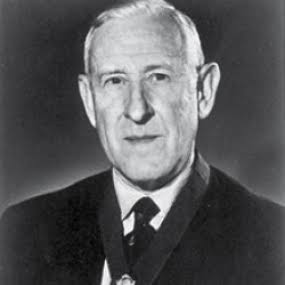
Forrest Vernon Sorrels, longtime Secret Service agent who rode in the lead car during President Kennedy’s assassination, dies at 92
Forrest Vernon Sorrels, the veteran U.S. Secret Service agent who served as Special Agent in Charge of the Dallas office and rode in the lead car of President John F. Kennedy’s motorcade on Nov. 22, 1963, died Saturday in Dallas. He was 92.
Born Sept. 16, 1901, on a farm in Bogata, Red River County, Texas, Sorrels moved with his family to El Paso as a teenager. He joined the Secret Service in 1923 as a clerk in the El Paso office, rising quickly through investigative ranks. By the mid-1920s he was serving as agent in charge there. Later transfers took him to Dallas, New Orleans, and Houston before he settled as Special Agent in Charge of the Dallas district, a post he held through the Kennedy assassination and until his retirement.
On the day of the assassination, Sorrels helped plan the motorcade route through Dallas and rode ahead of the presidential limousine with Dallas Police Chief Jesse Curry. After the shots rang out in Dealey Plaza, he continued to Parkland Memorial Hospital and later played a central role in the immediate investigation—locating key witnesses, securing film evidence including Abraham Zapruder’s, and participating in the questioning of Lee Harvey Oswald. He later testified before the Warren Commission.
Sorrels retired in 1969 after 47 years of service, one of the longest tenures in Secret Service history at the time. He was a former husband of Ruby Sorrels and later married Faye Agnes Silvey. He was buried in Stewart Cemetery in Henderson, Rusk County, Texas.
In an era when presidential protection protocols were still evolving, Sorrels embodied the quiet professionalism of mid-20th-century federal law enforcement. His decades of experience spanning multiple administrations and his firsthand role in one of the most scrutinized events in American history left a documented record that continues to inform historical understanding of that day in Dallas. He is remembered by colleagues and researchers as a dedicated public servant who spent nearly half a century safeguarding the nation’s highest office.