
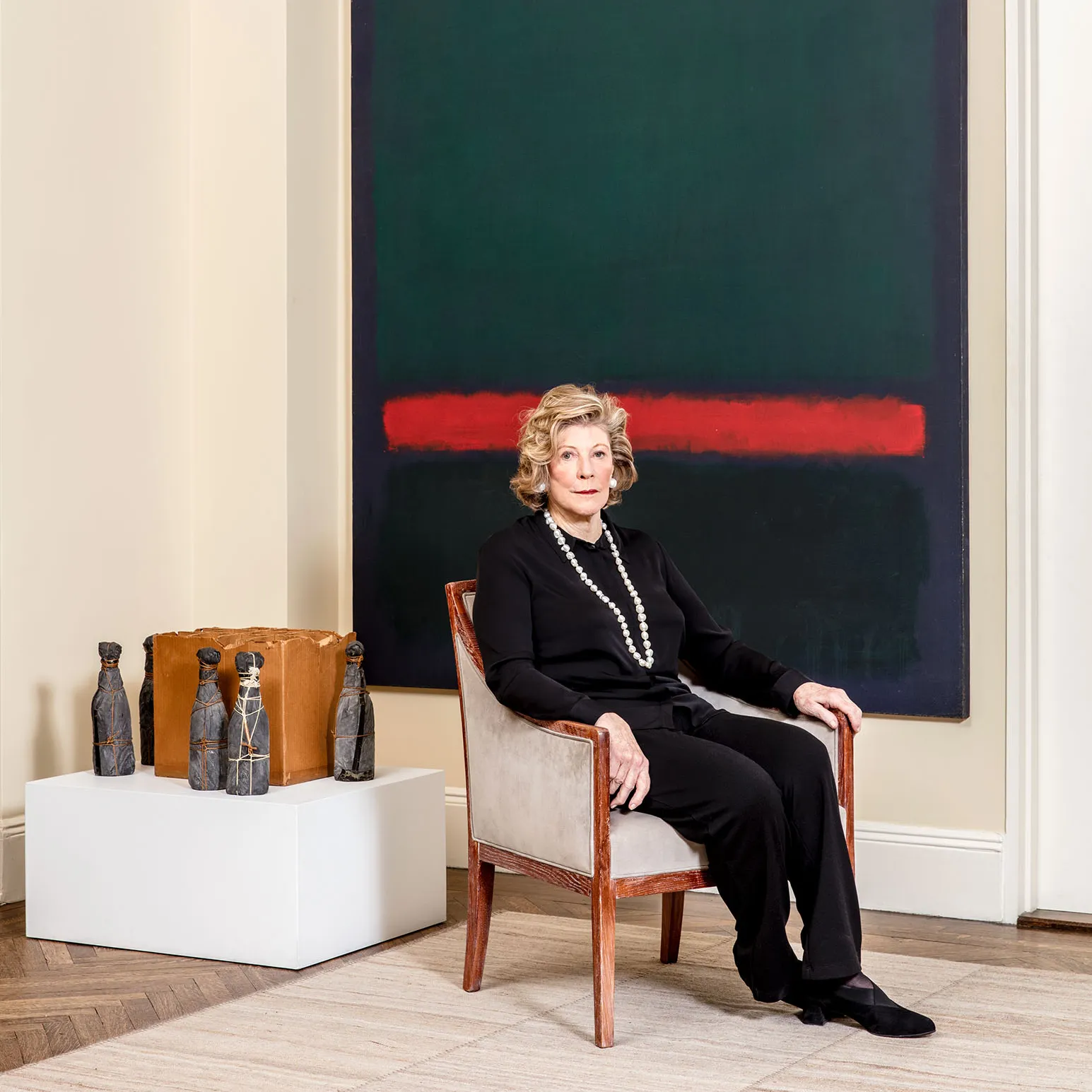
Agnes Gund, a towering figure in the American arts world renowned for her commitment to museums, education, social justice, and collecting, died on September 18, 2025, at age 87. Her passing has prompted widespread reflection on not only her many achievements, but the values she embodied—and the gap her absence will leave.
From Early Influences to Leadership in the Arts
Born in Cleveland, Ohio, in 1938, Gund grew up with exposure to art through her family and accessible public institutions, experiences that shaped a lifelong devotion to culture. She earned a bachelor’s degree in history from Connecticut College, followed by a master’s in art history at Harvard. Gund joined the Museum of Modern Art’s International Council in 1967 and became a trustee in 1976. She later served as president from 1991 to 2002, guiding a major expansion of MoMA and helping oversee MoMA PS1’s integration.
Philanthropy, Education & Justice
Gund’s impact reached far beyond institutional leadership. In 1977, during a fiscal crisis that severely cut arts education in New York City public schools, she founded Studio in a School, a nonprofit that brought professional art instruction back into classrooms. entary 13th about mass incarceration, she initiated the Art for Justice Fund, using the proceeds from the sale of a Roy Lichtenstein painting to seed a multimillion-dollar effort aimed at reforming the criminal justice system.
Her art collection, too, was a tool for change: she donated hundreds of works during her lifetime, with many more promised to public museums across the United States. Her collecting practice emphasized works by women and artists of color, contributing to a broader shift in the art world toward inclusivity.
Reactions & Lasting Legacy
Leaders of cultural institutions have issued heartfelt responses. William Griswold, director of the Cleveland Museum of Art, hailed Gund as a “tireless advocate for art and artists,” especially in her hometown. At MoMA, directors and trustees underscored how Gund’s generosity and vision reshaped museum collections, education programmes, and public engagement.
Her death prompts broader questions about how future patronage will sustain the values she championed: access, social justice, art in service of community. In many ways, her work set benchmarks—both in the scope of her giving and the intentional alignment of art with activism.
Agnes Gund’s life matters because she proved that art patronage can be more than status or aesthetics—it can be a vehicle for justice, education, and transformation. As museums and nonprofits consider how to honor her legacy, they—and we—are left with the challenge she often posed: to not just appreciate beauty, but to use it to build a fairer, more inclusive public sphere.