
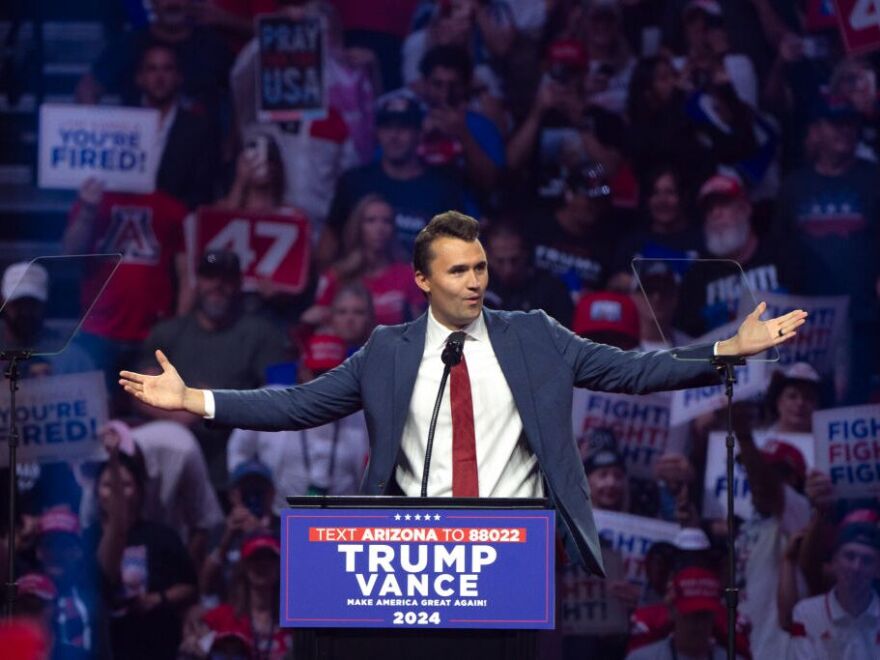
Orem, Utah — The sudden, violent death of Charlie Kirk has stunned students, political activists, and observers nationwide — and sparked renewed debate over campus security, free speech, and the risks of political violence.
At just 31 years old, Charlie Kirk — co-founder of Turning Point USA (TPUSA) and a leading voice in conservative youth activism — was fatally shot while speaking at an event at Utah Valley University (UVU) on September 10. What was meant to be one of many campus stops on his so-called “American Comeback Tour” ended in tragedy.
Kirk’s path to prominence had been rapid. Raised in the Chicago suburbs, he briefly attended community college before dropping out to launch TPUSA at 18. Under his leadership, the group — known for its outspoken conservative activism, campus chapters, and national events — grew into one of the most influential youth-oriented organizations in American politics.
Within hours of the shooting, condemnation flowed from political figures across the spectrum. Former U.S. President Donald Trump called Kirk “legendary,” ordering flags lowered nationwide and lamenting the loss of someone he described as deeply connected to American youth.
Meanwhile, many students and campus-goers at UVU expressed shock and sadness. A film student interviewed after the shooting said, “I disagree with what he stood for — but that doesn’t justify violence. This is America.”
In the days following, scrutiny has turned toward UVU’s safety protocols. Media investigations revealed that the event lacked certain standard protections — such as proper crowd control and sufficient law enforcement presence — raising concern that the tragedy might have been preventable.
The killing of a high-profile political figure on a university campus — at a moment when campuses across America are already grappling with polarization — matters deeply. It forces institutions, law enforcement, and the broader public to confront uncomfortable questions: How should campuses balance free speech and public safety? What steps are necessary to protect speakers and attendees? And at what point does civic engagement cross into becoming a security liability?
As the investigation into the shooting continues, many are calling for more robust security protocols at political events, better mental-health and de-escalation resources on campuses, and renewed efforts to reduce political extremism. For his supporters, Kirk’s death underscores the risks faced by public figures engaged in heated public debate. For his critics, it is a tragic reminder of how quickly public discourse can spiral into violence.
In the aftermath, the memory of Charlie Kirk — for better or worse — has become a focal point for national reflection about free expression, safety, and the costs of polarization in modern America.