
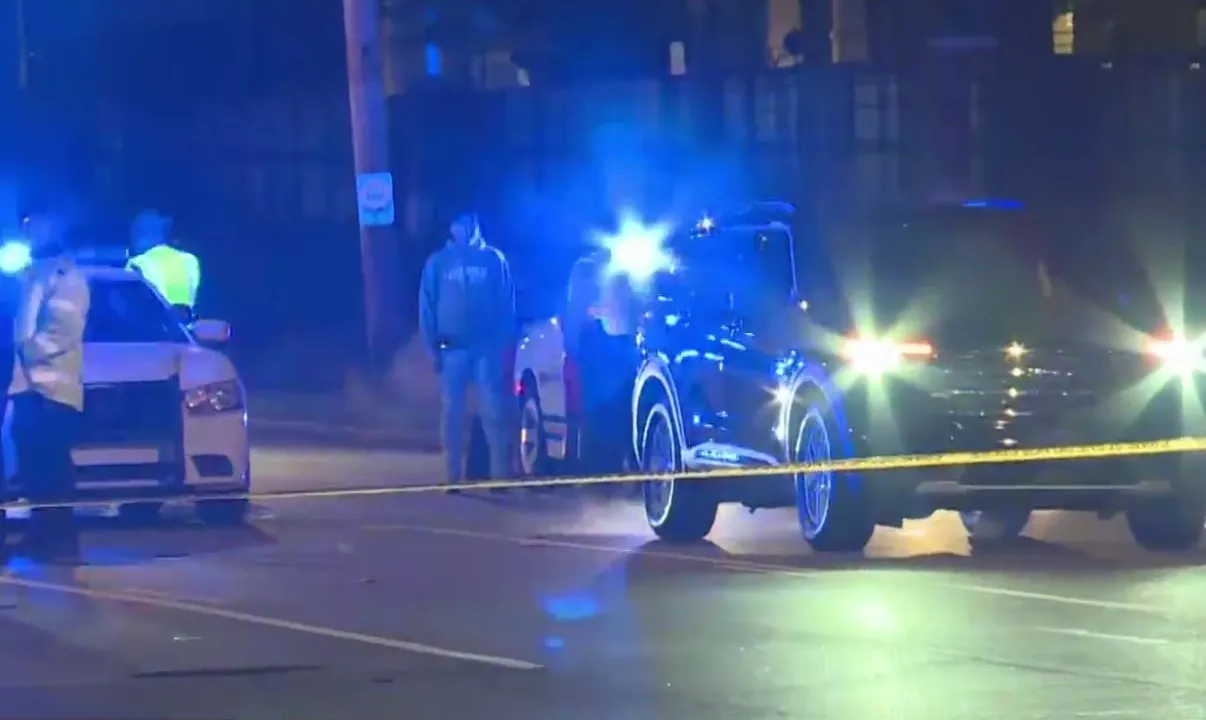
MEMPHIS, Tenn. — A Tennessee Highway Patrol investigation is underway after a Memphis Police Department patrol car struck and killed a pedestrian Friday evening near the intersection of Park Avenue and Getwell Road — a crossing residents describe as one of the city’s most dangerous.
According to police, the collision occurred around 6 p.m., when a patrol unit hit a person who was later taken to the hospital in critical condition. The victim, who has not yet been publicly identified, died from their injuries shortly after arrival.
Witnesses said the scene quickly filled with flashing lights and emergency vehicles. “As I was coming down Park and we got to Park and Highland, we seen all the blue lights down here,” said Willie, a nearby resident. “When we got closer, we seen the state troopers and stuff — it was like chaos.”
The Tennessee Highway Patrol (THP) has taken over the investigation to determine the cause of the crash — a standard procedure when a police vehicle is involved in a fatal incident. Memphis Police have not yet released further details about the circumstances leading to the collision or whether the officer was responding to a call at the time.
For many in the Park Avenue area, Friday’s tragedy has reignited long-standing concerns about traffic safety and pedestrian visibility. Residents say the intersection, often crowded with cars and pedestrians, lacks sufficient traffic control measures.
“It’s a bad intersection,” said Correy Ruetten, who lives nearby. “People at the light, they just yield and keep going. It’s always really busy — definitely a lot to pay attention to.”
Ruetten and others believe additional streetlights, pedestrian signals, and cameras could help prevent future accidents. City records show that the Park and Getwell corridor has been the site of multiple traffic incidents in recent years, reflecting broader challenges Memphis faces with urban road safety.
As the THP investigation continues, community members are calling on city leaders to review infrastructure and traffic enforcement in high-risk areas. “That person probably still had a whole life to live,” Ruetten added somberly. “We can’t keep losing people on our streets.”