
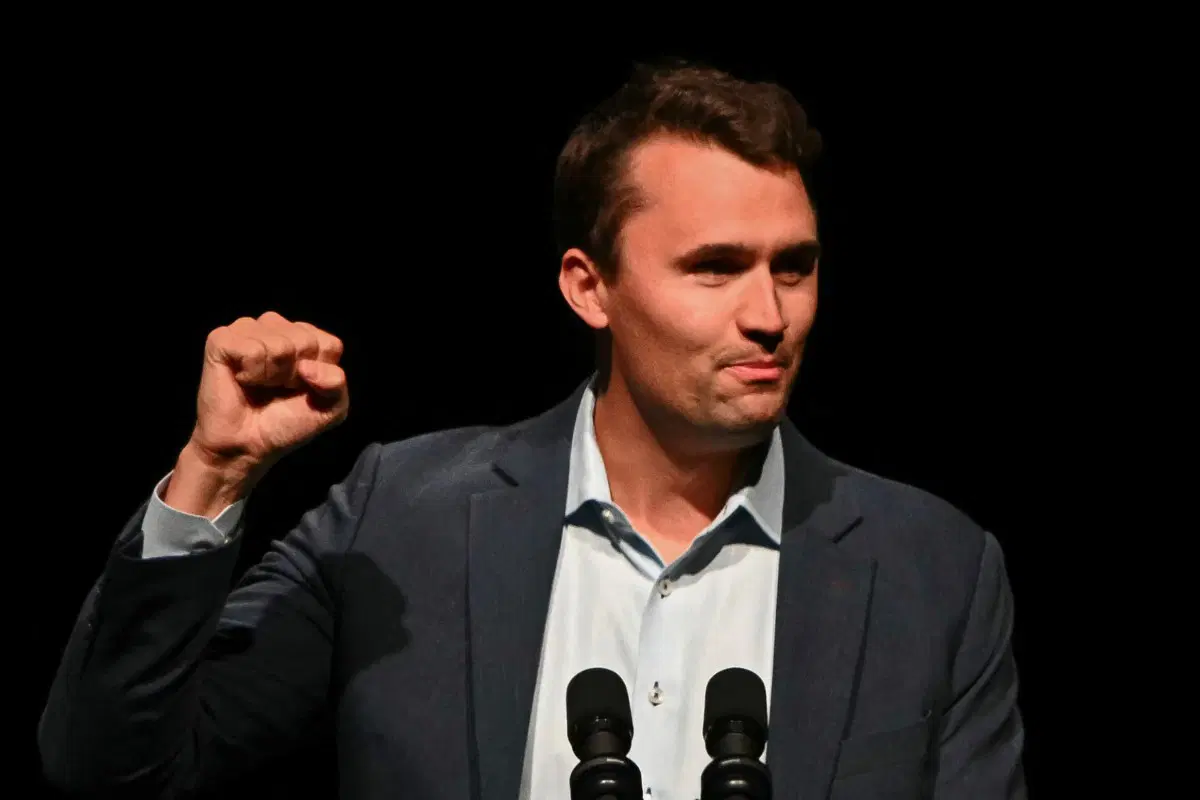
Charlie Kirk Shooting Sparks National Shock and Renewed Fears of Political Violence
The fatal shooting of conservative activist and youth leader Charlie Kirk at Utah Valley University on Wednesday has sent shockwaves across the United States, highlighting deep concerns about the rise of political violence in an already polarized nation.
Kirk, 31, was a prominent figure in right-wing politics and a close ally of former President Donald Trump. He was struck by gunfire while speaking before a large crowd, collapsing as panic spread through the audience. Although the university initially reported a suspect in custody, multiple outlets later said no arrest had been confirmed, leaving the public in a state of unease.
Trump himself confirmed Kirk’s death on social media, calling him “beloved by ALL, especially me,” and ordered flags on federal buildings to fly at half-staff until Sunday. The White House lowered its flag shortly after the directive.
“No one understood or had the heart of America’s youth better than Charlie,” Trump wrote. “Melania and my sympathies go out to his wife, Erika, and family.”
Witness Accounts of a Shocking Scene
The shooting occurred during a question-and-answer session, according to former Utah congressman Jason Chaffetz, who was present at the event. “The first question was about religion… the second was about transgender shooters and mass shooters. In the midst of that, the shot rang out,” Chaffetz recounted to Fox News. “Everybody hit the deck. People were screaming and running.”
Attendee Sophie Anderson told the Daily Mail she was about 100 feet from the stage. “He was shot in the neck and just fell over. It was horrifying,” she said.
A Polarizing but Influential Figure
Kirk’s political career began early. In 2012, he co-founded Turning Point USA, a group dedicated to mobilizing conservative youth. With his sharp debating style and showmanship, Kirk became a fixture on cable news and college campuses, where he drew enthusiastic support and fierce opposition. His advocacy spanned immigration restrictions, gun rights, and Christian conservatism — messages amplified by millions of followers across Instagram and YouTube.
Analysts credit him with helping Trump secure critical support among young voters, playing a role in the Republican Party’s resurgence in recent years.
Reactions Across the Political Spectrum
News of Kirk’s death drew widespread condemnation and grief, transcending partisan lines. Vice President JD Vance posted, “Dear God, protect Charlie in his darkest hour,” alongside a photo of Kirk with Donald Trump Jr.
Right-wing commentator Tomi Lahren described him as a “visionary.” But messages of sympathy also came from the left. Former President Joe Biden wrote on X: “There is no place in our country for this kind of violence. It must end now.” California Governor Gavin Newsom called the act “disgusting, vile, and reprehensible,” while Vice President Kamala Harris added: “Political violence has no place in America.”
Former congresswoman Gabrielle Giffords, who survived a 2011 shooting in Arizona, said she was “horrified,” stressing that democratic societies must “never allow disagreements to be confronted with violence.”
What This Means for America
Kirk’s killing underscores growing anxieties about the safety of public political discourse in the U.S. With partisan tensions already high, the attack raises fears of copycat violence and the further erosion of civil debate. Experts warn that unless leaders across the spectrum reaffirm commitments to nonviolence, America risks entering a dangerous new era where political disputes are settled by force rather than words.
For Kirk’s supporters, the loss is deeply personal. For the nation, it is another grim reminder of how fragile democratic norms can be when rhetoric turns to bloodshed.