
Matadi Kibala Market Tragedy Sparks National Grief and Demands for Reform
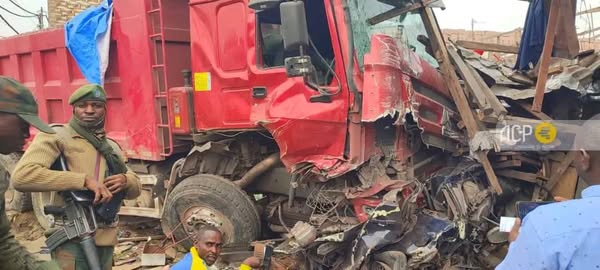
MATADI KIBALA, Democratic Republic of the Congo — A devastating trailer accident early Tuesday morning has left at least three confirmed dead, dozens critically injured, and an entire community in mourning. The incident, which unfolded around 8:15 a.m. at Camp PM market, was one of the deadliest the region has seen in recent years, prompting urgent calls for road reform and public safety enforcement.
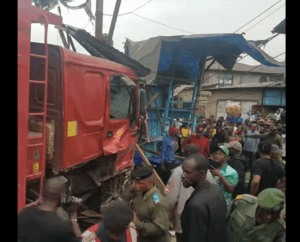
The disaster occurred when a gravel-loaded dump truck, descending from Mitendi on National Highway 1, lost control due to suspected brake failure. Careening down the slope and unable to stop, the vehicle barreled into the market, destroying seven cars, crushing fragile roadside vendor stalls, and sending hundreds of panicked shoppers and merchants fleeing for their lives.
“I saw people vanish under the truck. It didn’t slow down—not even a little,” recounted local vendor Jean Mbala, who narrowly escaped. “It was like watching a building fall over a crowd.”
Lives Lost in Pursuit of Daily Bread
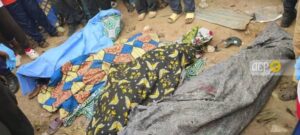
The confirmed victims were all local market vendors—people who made their living selling produce, clothing, and household goods from small wooden stalls. Their names have yet to be officially released, pending notification of next of kin, but witnesses identified at least two women and one elderly man among the deceased.
As ambulances and volunteers rushed to transport the wounded, onlookers formed prayer circles, cradling survivors and tending to the bleeding with strips of cloth and bottled water. Several victims were taken to Matadi and Kibala General Hospitals, where emergency surgeries continued through the afternoon.
“We work here because we must,” said Mama Lelo, a tomato seller who lost a colleague in the crash. “But every day, trucks pass within a few meters. We are always at risk. This time, we were not lucky.”
Safety Policies Ignored—With Fatal Results
At the heart of public outrage is the fact that this exact scenario was supposed to be preventable. Just three weeks ago, regional authorities implemented a ban on heavy trucks during daylight hours on Highway 1—a ban that was quickly lifted following backlash from commercial drivers and transport associations.
That reversal now stands as a tragic turning point. “The ban was put in place for a reason,” said Pierre Kalala, a member of the local district council. “Today, we face the deadly consequences of letting pressure override policy.”
Investigations into the crash are ongoing. Police have detained the truck’s driver, who survived the crash, and are examining the vehicle’s maintenance logs and inspection history. Preliminary reports suggest poor brake condition was a likely factor—raising serious questions about the company responsible for its upkeep.
A Market in Mourning, a City Demanding Action
As news of the accident spread, hundreds gathered at Camp PM market by dusk. Makeshift memorials formed at the crash site: flickering candles, plastic flowers, torn fabric tied to twisted poles—symbols of solidarity and remembrance.
Preacher Anne Mukuna, leading a prayer vigil, implored officials to value human lives above logistical convenience. “These are not just market sellers—they are the backbone of our community. We cannot keep sacrificing them to the road.”
Grief has swiftly turned into activism. Local NGOs and civil society groups are now calling for the immediate reinstatement of the truck curfew, alongside a package of other safety reforms, including:
- Zoning vendors away from direct road exposure
- Mandatory commercial vehicle inspections
- Enhanced traffic enforcement during high-risk hours
- Government-backed road safety campaigns
The accident has also reignited conversations around urban planning and informal economies. With thousands relying on roadside commerce to survive, the state faces increasing pressure to create safer, regulated spaces for economic activity—without displacing vulnerable populations.
National Reflection and International Concern
As aerial footage and eyewitness videos of the tragedy spread across Facebook, WhatsApp, and other social media platforms, the story has dominated online discourse. Users across the Democratic Republic of the Congo are using hashtags like #MatadiKibalaCrash, #TruckBanNow, and #JusticeForVendors to express their outrage and sorrow.
International observers have also noted the pattern: unregulated commercial transport, overcrowded urban roads, and insufficient enforcement continue to plague major trade routes across sub-Saharan Africa. This tragedy, many argue, must become the moment where the DRC decisively acts.
In Memory, With Purpose
For now, the community of Matadi Kibala grieves—not only for the lives lost, but for the preventable nature of their deaths. As funeral arrangements are being made and hospitals struggle to accommodate the injured, residents say the only true justice is reform that endures beyond the news cycle.
“This must be the last time,” said activist Thérèse Lunda, standing amid the wreckage. “We have cried enough. We must build a safer future—beginning today.”
Meta Description (for search engines):
A deadly trailer accident in Matadi Kibala, DRC, claims at least three lives and injures dozens more. Eyewitnesses and officials demand urgent reform after brake failure leads a gravel truck into Camp PM market.
Suggested Facebook Caption:
Tragedy in Matadi Kibala: A truck crash at Camp PM market has left multiple families in mourning. Locals are demanding justice, safety reform, and an end to preventable road deaths. #MatadiKibalaCrash #JusticeForVendors #TruckBanNow