
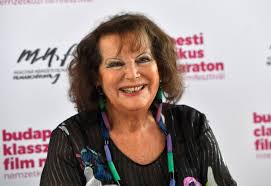
ROME / PARIS — The film world has lost one of its enduring legends. Claudia Cardinale, the Tunisian-born Italian actress whose presence defined post-war European cinema, has died at the age of 87. Her agent, Laurent Savry, confirmed that she passed away in Nemours, France, surrounded by her children.
A Luminary of Her Generation
Cardinale’s career spanned more than six decades and included over 100 film and television appearances. She rose to international prominence in the 1960s with transformative roles in Federico Fellini’s 8½ and Luchino Visconti’s The Leopard, both released in 1963. In Once Upon a Time in the West, she brought emotional resonance to her character, carving a place in the pantheon of spaghetti western icons.
Her filmography also included intriguing diversions: comedies (The Pink Panther), dramatic epics, and later, work in theater and television. Despite opportunities in Hollywood, she remained committed to European cinema and declined exclusive studio contracts.
Trials, Triumphs, and Tenacity
Beyond the screen, Cardinale’s life featured complex personal struggles. She reportedly concealed a pregnancy born from an abusive encounter early in her career, later naming her son as a sibling to shield her public image. Her relationship with producer and husband Franco Cristaldi, who managed her career zealously, at times limited her autonomy—a tension she later spoke about in interviews. Over time, she overcame professional ostracism and transformed into an independent force, choosing roles and mediums that reflected her evolving artistic identity.
In her later years, she lent her name and voice to social causes. She served as a UNESCO goodwill ambassador, with a focus on women’s rights and broader cultural heritage issues.
Reactions and Legacy
Tributes poured in across Europe. French President Emmanuel Macron said France “will always carry this Italian and global star in our hearts.” Italy’s Culture Minister Alessandro Giuli praised her “exceptional talent” and called her “one of the greatest Italian actresses of all time.” Film critics and historians pointed to Cardinale’s rare capacity to fuse sensuality and depth—a magnetic presence that could anchor sweeping historical drama or intimate human portrait.
For contemporary filmmakers, her refusal to be pigeonholed remains a lesson. In an era when actresses often struggle to maintain agency, her career serves as a model of resilience: she moved through genres, languages, and styles without compromising her integrity.
Her departure leaves a deep void in cinema. As one editorialist put it, with her passing “one of the last divas of classic European film” has slipped into memory.
In the coming days, retrospectives and renewed attention to her work are inevitable—and fitting. Cardinale’s story matters not only for what she achieved on screen, but for the layers of identity, struggle, and reinvention behind her luminous face.