

A Baseball Innovator Remembered
Davey Johnson, the revered Major League Baseball manager who guided the New York Mets to their unforgettable 1986 World Series triumph, has passed away at the age of 82. Confirmed by MLB and trusted outlets, his death occurred on September 5, 2025, in Sarasota, Florida, after a long illness.
 From Stellar Player to Visionary Manager
Johnson’s legacy spans both player and managerial excellence. As a second baseman for the Baltimore Orioles, he clinched two World Series titles (1966, 1970), earned four All-Star selections, and took home three consecutive Gold Glove Awards. His power-hitting peak came with the Atlanta Braves in 1973, swatting 43 home runs—and joining batting giants like Hank Aaron to form an historic trio.
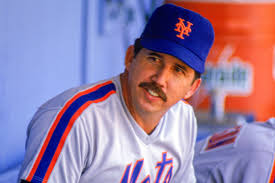
Transitioning to management, Johnson took command of the Mets in 1984. He quickly transformed a struggling team into a powerhouse, leading them to five straight 90-win seasons, including a staggering 108-win 1986 campaign crowned with World Series glory. His 595 victories remain the most by any Mets manager.
Championing Analytics Before It Was Cool
An early adopter of what later became known as sabermetrics, Johnson—armed with a math degree—used computer simulations and innovative lineups long before analytics became mainstream in baseball. His forward-thinking approach helped reshape managerial strategy across the sport.

A Legacy of Respect and Rivalry
Johnson’s managerial achievements went well beyond New York. In a 17-year career spanning five franchises—including the Reds, Orioles, Dodgers, and Nationals—he amassed a record of 1,372–1,071, equating to a .562 winning percentage—among the highest for managers with over 1,300 wins. He twice received the Manager of the Year award: in 1997 (AL) and 2012 (NL) .
Voices From the Community
His passing prompted outpourings across the baseball world:
- Hall of Famer Jim Palmer, a long-time teammate, reflected emotionally on the loss of a comrade.
- Darryl Strawberry, a star from the ’86 Mets, called Johnson a “remarkable leader” who empowered players while demanding excellence.
- Nationals GM Mike Rizzo paid tribute to Johnson as “one of the great baseball minds of all time. A forward thinker with an old-school soul.”
Johnson helped define an era—one in which baseball embraced both personality and precision. He was as comfortable leaning on analytics as he was galvanizing locker rooms full of electric talent. His 1986 Mets remain emblematic of that blend: resilient, daring, and unforgettably dramatic.
As fans and the baseball community mourn, Johnson’s legacy will persist—etched in championship lore, innovative strategy, and the lives of players he led.