
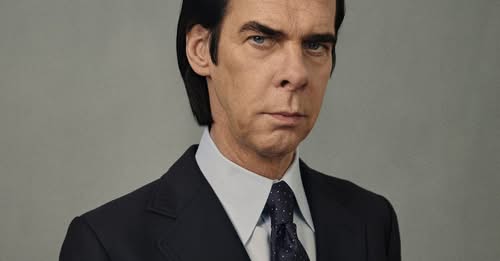
Nick Cave opens up about grief, fatherhood, and the emotional impact of losing his sons, Arthur and Jethro. The artist shares how tragedy reshaped his music, identity, and view of the world.
New Delhi: Acclaimed Australian singer-songwriter Nick Cave has spoken candidly about how the tragic deaths of his sons, Arthur and Jethro, reshaped his worldview, transformed his music, and deepened his understanding of grief, love, and resilience.
Cave, now 66, has long been known for his lyrical honesty and emotional intensity. But the loss of two sons—15-year-old Arthur in 2015, and 31-year-old Jethro in 2022—has profoundly altered his relationship with the world, with others, and with himself.
“We change, sometimes multiple times, shattered by events,” Cave told The Big Issue in a recent interview. “This can fundamentally change the way that you perceive the world and the way you behave.”
A Father’s Grief in the Public Eye
Arthur Cave died tragically in 2015 after falling from a cliff near the family’s home in Brighton, England. The event sent shockwaves through the music community and left Cave and his wife, fashion designer Susie Cave, reeling. The raw grief that followed was not hidden from the public. In fact, it became a focal point of Cave’s creative and personal transformation.
In early interviews, Cave admitted that grieving in the public eye initially felt invasive. But over time, the immense wave of support became an unlikely source of comfort.
“I had letter after letter addressed to ‘Nick Cave, Brighton’,” he told The Guardian. “That attention, and sense of community, was extremely helpful to me.”
Rather than retreat into silence, Cave found solace in sharing his vulnerability. “It stopped me completely shutting the windows and bolting the doors and just living in this dark world,” he said.
Jethro’s Death and a Complicated Bond
In 2022, Cave lost his eldest son, Jethro, aged 31. Jethro was the son of Cave and Melbourne-based model Beau Lazenby. Their relationship was, as Cave admitted, “complex.” Still, the death added another layer to Cave’s evolving perspective on fatherhood, responsibility, and loss.
The singer has since spoken about how these personal tragedies reshaped not just his life, but also his art. “It made me a little less precious about my own place in the world,” he reflected. “The worst had happened. It maybe made me a little braver about things.”
Music as a Vessel for Memory and Meaning
Loss, Cave noted, has made his music braver—less tethered to ego and more driven by truth. One of his most enduring songs, “O Children,” written in 2007, has taken on new layers of meaning over the years. Originally inspired by watching his children play in a park, the song has become a lament for a world in which innocence is increasingly vulnerable.
“I wrote about this f*****-up world we were creating and that we had no way of protecting our children from,” he said. “From a personal level, I was not able to protect my children. And today too, children are dying everywhere in their thousands. It asks the same question: what kind of a world are we creating for our children?”
Despite being written over two decades ago, O Children remains Cave’s most streamed track on Spotify—a testament to the song’s enduring emotional resonance and universal themes.
A Life Reshaped by Tragedy
Cave’s journey through grief has been marked by reflection rather than resignation. He and Susie continue to raise their two other sons, Earl—an emerging actor—and Luke, away from the public eye. Through interviews, performances, and his ongoing dialogue with fans, Cave continues to explore the contours of sorrow, survival, and spiritual renewal.
He’s never shied away from the messiness of life and love. Instead, he’s invited the world to witness what happens when a man breaks—and then begins to rebuild. His openness has resonated with many who have experienced similar losses, offering a rare and honest portrayal of grief in the modern age.
“I think people are usually just on their own with these sorts of things,” he said. “But we weren’t.”
Legacy Through Connection
Nick Cave’s willingness to remain open—through letters, interviews, and music—has turned his personal sorrow into a shared conversation. It’s this ongoing exchange that has given his life and legacy an even deeper resonance.
For Cave, the journey of healing is not about forgetting, but about integrating. It’s about learning how to carry both love and loss forward, and helping others do the same.
In a world increasingly marked by uncertainty and pain, Cave’s story stands as a testament to how art, community, and vulnerability can create space for healing.